Not a financially successful one.
That’s luck once you’ve got past the basic requirement of ‘having a book that’s up to a certain level’ (and believe you, me – it’s not a high hurdle, have you read some of today’s best sellers? Market, people. Market!)
But I get ahead of myself.
This short series will be looking at how you put together a basic competent book you can stick up on your self-publisher of choice and then start the hard work of getting something other than a sense of satisfaction by having people buy the damn thing.
(And no I don’t follow my own advice half the time so saying that my own books don’t meet the ‘basic competence’ hurdle I’m setting isn’t the own you might think it is. I’m the Cormac McCarthy of bad writing choices and almost every one of them is a conscious and poor choice that I’m comfortable with. Look how I’ve begun that paragraph with ‘And’, I do that a lot, and I break up everything I write with enormous digressions into random crap, like a cartoon cutaway but with zero humor.)
After all, life’s about more than financial success. Or writing is anyway as there’s a good chance only about four people will read your book (see Twitter for more details).
Sometimes life’s about yet another last minute twist that I’ve included enough hints at in the earlier chapters that if you missed it coming then I’ve got some Crypto projects in which you may be interested.
Blockchain y’all.
Sigh.
Anyway. This series (if I bother to complete it) will be setting out a few basic rules you can apply to have a book up for sale that doesn’t look like a keyboard accident and won’t lead directly to pained smiles among your friends as they explain how their Amazon account got locked so they can’t ACTUALLY review your book.
You know the book formatting I’m talking about, picture nerd typing away in school library, intent on the thesis construction ongoing, bully lumbers up, evil chuckle, turn to hangers on, grin. Approach. Nerd oblivious, hand on back of head, a twist, but… SMACK goes face into the keyboard and voila.
Instant bestseller.
If you put enough money into it. Marketing can do a LOT.
Okay, kinderen. Let’s begin.
Step One. Get words on paper. Not in your head. On paper. That’s where they need to go. Oh yes.
Yes. You need words on paper (or its electronic equivalent) to have a book to publish.
And that’s the standard way to start one of these. And the reason is… because it’s true. How do you start a journey, one step. How do you write a book? You… write a book.
(pace picture book authors. you have your own cross to bear).
That means sitting in front of a screen (whatever type you choose to use, monitor, phone screen, literal paper jammed into a feeder on a typewriter if you’re an insufferable hipster) and typing lots and lots of words.
How many you ask? Well this series is really aimed at full length books but some of the most profitable and best selling offerings I’ve seen fall into the novella and smaller genre.
That’ll rely on a strong simple story with good writing and a bit of social media knowledge.
Not Twitter. Twitter (currently) sells nothing. You’ll be looking at TikTok and I don’t want to look at TikTok or Instagram. Somewhere where a catchy song and some page flipping over text can generate a bit of buzz.
As Financially successful books are all about marketing. Which I’m not going to be addressing here. There is a whole profession devoted to it and the last thing I read on Marketing was dated to the mid 60s. It’s sat right next to my knowledge of the Companies Act 1948.
So. Back to subject. Somewhere between 50k and 70k for some basic genre fiction is a good target for a first draft. There’s a reason Nanowrimo uses 50k as its base for a month’s story and lower is better in my opinion as I’m an ‘adder’. If it’s running definitely take advantage of a Nanowrimo as those little graphs are a great combo of guilt trip and dopamine hit.
50k’s enough to constitute a story with some action, twists and turns and fun stuff that makes you say ‘ooo I can write’ whilst not being too much so that you’ll be mostly cutting when you get around to editing which I promise could lead to incoherence and lots of remedial – oh I cut that bit out a month ago and now the whole hinge of the story doesn’t work…
It doesn’t need to be great, it just needs to have some structure, be written in a language with which you are conversationally conversant, and hold enough coherence that when you edit it (yes, you or someone you know will have to edit it, several times, more on that later) you’ll know where you’re going even if it didn’t quite turn out how you expected.
Get at that keyboard, pound keys when you’re feeling like it and get a chunk down. Habit, habit, habit plus guilt will power you. When you get to 10k you’ll feel like you’re sufficiently invested that you’ll make it to 20k if nothing comes up and at that point the sunk costs fallacy keeps you going.
You can’t waste all that effort. Surely you can’t?
Ah, you ask. But what about planning?
Well, reply I, if that works for you, good, ya weirdo. You’ll definitely need an idea of what your story is and if you like to plan I wish you the best of luck on the thirty-third iteration of your master plan which includes all the words five times over that would otherwise have been in your manuscript.
Maybe you could publish a book that’s entirely top rated plot planning? With those little flow charts and some character pictures? That would be kinda interesting?
Ha. Just kidding you Planners. Do what works for you. If your story is as rigid as a finely constructed building and you know where every brick needs to go definitely go that route. You’ve likely got a great career ahead of you writing D&D scenarios (more of a Delta Green sort myself).
For me, my books tend to wander off by themselves and I follow them whither they may.
As to what to use, something simple is my suggestion.
Word, Google Docs, Libre Office, whatever nightmare of efficient engineering Macs use (seriously, consider a Mac, publishing and formatting something professional gets easier but you’re going to pay through the nose, and that one click mouse…).
The more ‘authory’ programs that let you set up mood boards and character pictures and statistics and plot threads are good if you know what you’re doing with them. Again, if you’re the sort of person who likes learning some relatively complex tools to improve your process, knock yourself out.
Can Really plot the hell out of your story with one of those!
Once you’ve got the hang of one of them (looking at you Scrivener) I suspect you’ll have a great time writing and everything will hang together very slightly better than if you hadn’t done it.
However, if you’re not a hardcore plotter and think you’re going to dive in and get your book written without knowing the ins and outs of the professional writing software…
Nope. That’s a serious time investment (which, after all I’ve said above, if you’re going to be writing a LOT you may well be better for so doing).
Next is step 2. It’s shorter and includes minimal insults.
Step 2 – Time to Edit! AND DON’T KEEP EDITING THE FIRST TEN PAGES. SERIOUSLY.
Now you’ve got 50k words or so in the language of your choice (or 200k with random nonsense interruptions of your dozen made up languages and big chunks of horrible poetry in Iambic Pentameter if you’re writing High Fantasy, hey-o!) with the words ‘the End’ at the end (a good place but for the scattered random notes and chunks of text you cut out and kept in the pages beyond in case you could find a place for them)…
…and you’re subconsciously hoping you to never see that document again in your life.
Because, (Bad writing? I did it again! That’s a Comma and I’ve capitalized Comma!) Somewhere deep in that cesspool you call a psyche (we can see your internet history…) there’s a part of you that’s moaning ‘my book is terrible, please don’t make me read it. I feel sick. It’s a reminder of my failure… no more. Bury it at sea.’
You’ll be envisaging all the errors, sitting there, on the page, like the a legion of monsters under your bed, and you’ll be too scared to click on the document in your recent documents list (ever receding) and have all those horrors emerge the moment you stick a toe out of your cover.
Surely it can’t be as bad as you fear?
And to paraphrase the Devil in the Prophecy.
It is! You’ve written an unpublishable mess that would make a creative writing major turn themselves inside out in disgust.
That’s because it’s a first draft. No one writes a great first draft, whether you have a degree in writing or not. There’ll be plot hole after plot hole, and that’s if you’re good enough to have produced something with an identifiable plot to HAVE holes. Sentences will just.
There wiil. Be. Some of the worst. So many erroors. Sentences beginning ‘And’, ‘But’. Oh the word ‘just’ so many justs. Do a find and replace. Prepare for a kick in the nuts about your writing rhythms.
You’ll be known forever as Jack the Just. You’ll really really really wish you knew a different word for really. And there’ll be other ticks. Bet you didn’t know how hung up you were on the word ‘moist’ or your habit of switching tenses in mid sentence?
Some of your characters names will change. In my case to Albert. Or some variant. Don’t ask me. It’s how things are. Like drowning in water if you stick your head in it and don’t come up.
Some will disappear. The word ‘some’ will stick out like a sore thumb and…
And you know what. That’s all fine. It’s normal. Repeat after me.
First draft!
Your next step is to take this mess of half baked ingredients and use your brain to give it a damn good cooking.
In cake terms you’ve got a mix. It might taste terrible but you can adjust it now, a bit of cinnamon, a bit of sugar, pick out the egg shells, strain out the excess water… Wait, that’s just my attempts at cooking.
You are going to take those 50k words and run through it, start to finish and you are going add, subtract (add tends to win out) and you are going to come out the other side with something you’d be pretty happy to show to a third party.
Or scrap the project as trash. Don’t do that by the way. Most stories are salvagable. The first draft of the Lord of the Rings was just the plot to the Rings of Power, but with Galadriel replaced by a robot called Ronny the Knife, and look how that turned out?
The key thing here is not to keep going over the same bit of your story again and again. You’re not going to make it perfect, make it serviceable. Take out those duplicate words, correct the grammar, make sure the basic outlines of the conversations read like conversations, add a little characterization to add flavor.
Patch some plot holes if you like. Have a piece of paper next to you to remind you of threads you need to pick up later and check that’s happens in the following chapters.
(That’s it, that’s the limit of my plotting. Bet you can’t tell. Stream of consciousness for the win.)
If you keep going over the same part you’re going to end up with the following.
- A massively overwritten introductory chapter that’s three times too long.
- Which consists mostly of exposition as you’ll want to unburden yourself about the world here to make sure you’ve got the points you want down.
- Which also somehow makes those points about four times, each time in a more on the nose and unpleasant to read fashion because you want the reader to get how DAMN RED THE SKY IS IN THE ICE AGE IN SCARLET SERIES AND…
- Which takes all the good elements in your setting and runs them into the ground. Wanted a light dystopia with a hint of humor? Nope! After the fifth rewrite of Chapter One what you have is the grimdark of Warhammer 40k with added cosmic horror and a solitary joke about necrophilia.
Hah. Out of that list. That took a lot more effort than I was expecting.
Key point in stage two is as follows:
A. Read your manuscript from start to finish.
B. Tweak it till you don’t feel actively sick reading it.
C. Then leave it alone for a couple of days if you like.
You’ve earnt a break. You’ve got a book. It’s just not publishable yet, because it takes a village and people are fundamentally incapable of seeing what’s actually improvable about their children once they’ve got over the initial ‘oh god I have to change diapers/nappies stage’ and are in the ‘wow, this is awesome, who needs sleep when you’ve got a good supply of diaper bags’ stage.
Next step is getting some outside context. Like a happy little civilization of bronze age cattle farmers meeting the zombie hoard for the first time.
You’re going to love it.
Toodle pip.
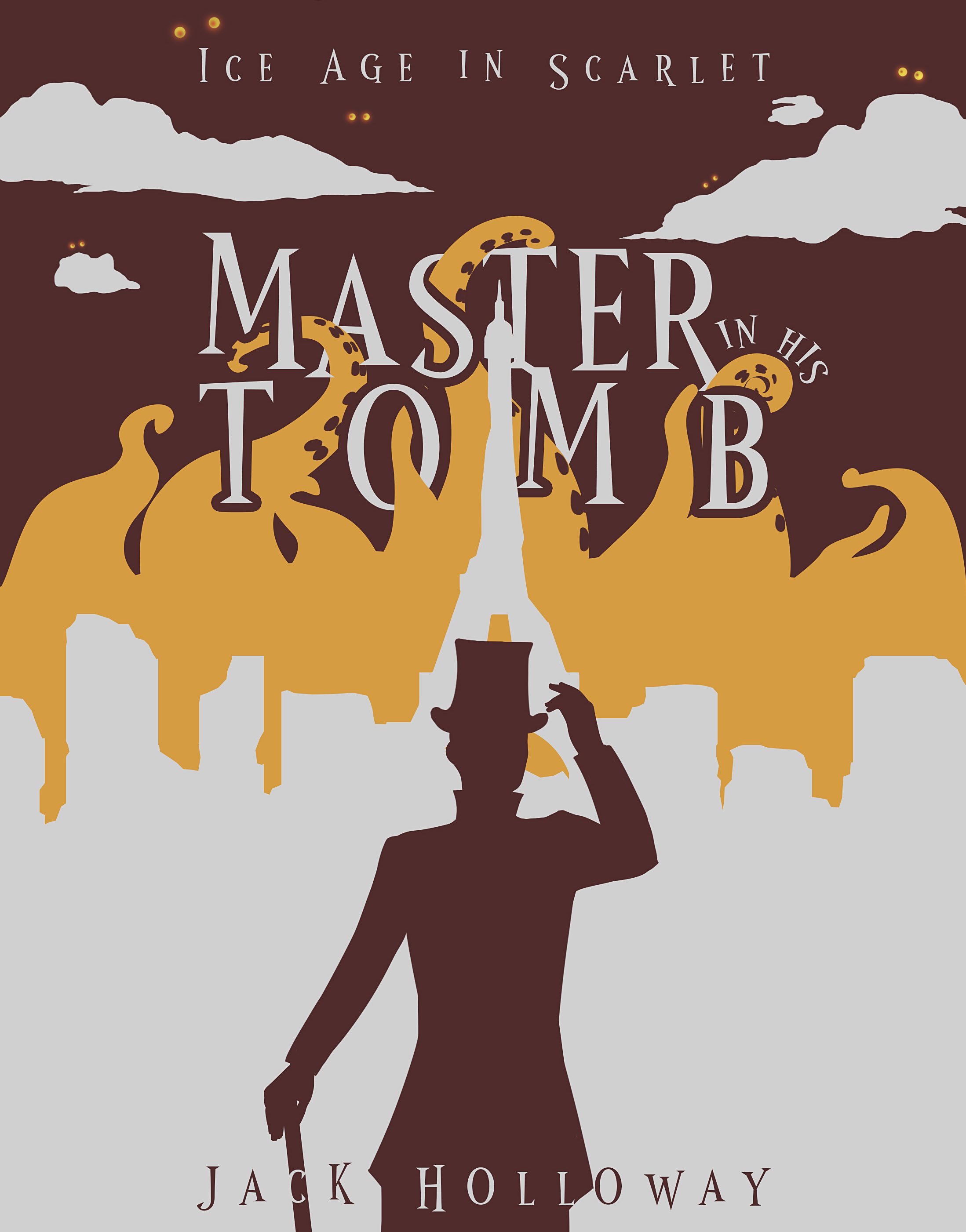
 Ice Age in Scarlet