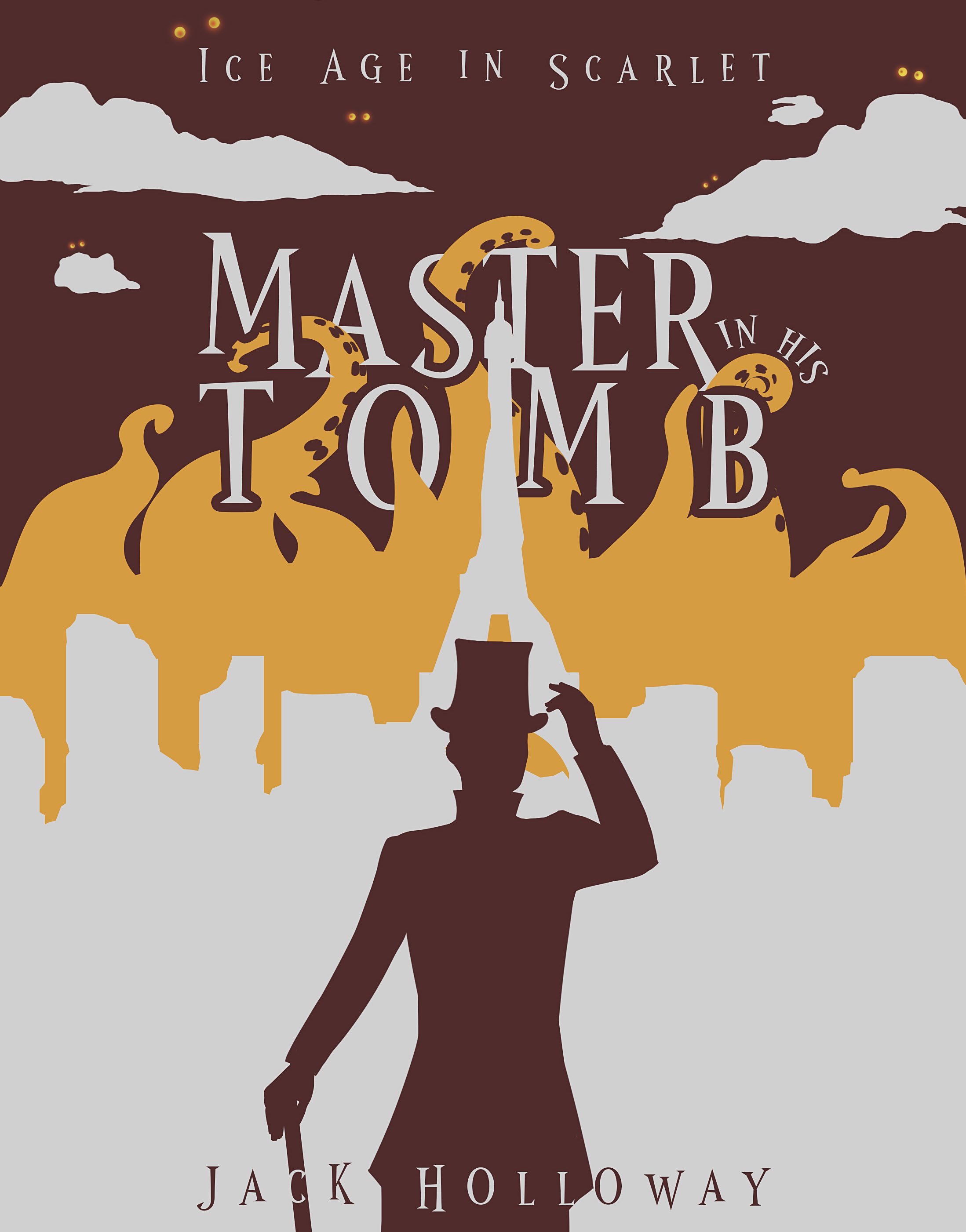

Recent blogs have run through the ‘optimal’ way to read your way through the Ice Age in Scarlet. I’ve got no intention of ending that particular thread but I wanted to note an additional thread that’s come up.
I’m adding in an under-arc to the series. Something that’s happening under the surface and of which the main characters are barely aware but which drives a lot of the narrative. It means maybe a half dozen lines in each book added and I think it adds a bit to the overall mythology that sits behind the Ice Age in Scarlet concept.
Specifically I’ve added a big ole threat which explains the motives of the main ‘baddy’ a lot better than his previous ‘lost family’ driver. After three thousand years I’d already accepted that he was doing things for other reasons. Now I’m clear on what those are.
The threat’s not coming out of nowhere. It’s always been referenced at points in the books already written. A basic rule of travel through the world woods is not to stumble on to the paths that lead through the woods that thrived in the Dogger Littoral (before it was washed away when the British Isles separated from the continent) and there’s even a guardian (the druid who sits building his wall) who tries to enforce this.
He had stern words for the main character in the Witch duology when she took the wrong path and ended up pursued by something nasty and shadowy, looking for her daughter.
So there’s something in those woods. You don’t go there if you’re sensible and whatever it is wants to get out.
And I’ve decided those things that want to get out are pretty eldritch horror-y. The same sort of power levels as the Fae Queens which makes them a step change from most of the threats in the Ice Age series.
As to what they are, well, Albie in Master in his Tomb is of the opinion (when we meet him in the 2060s) that vampires are just the larval form of something bigger and more powerful, and he thinks (given his own experience) that they new form will be something marvellous and wonderful. After all his experience of aging has been that his care and respect for humans has been increasing over time and his self appointed capacities as protector of the living would be wonderfully increased if he could work out what he was turning into.
That’s Albie today of course. Before he started to lose his memory he was well aware that wasn’t the case and that might just explain why all his plans whilst he was the Master of Masters (even after he’d forgotten quite why he might do such a thing) tended to get his charges killed, and also why he has a habit of culling overly powerful masters.
Heck it might even explain why he specifically picks ‘civilised’ sorts to turn into vampires rather than warlords and strategists.
It also explains the end of the Witch duology far better than my original thought on why things were happening…
Anyway. Enjoying adding in the shadows to this particular story and have 3000 words written of an alternate line where the Ice Age didn’t happen and Brooker is a hero, of sorts. May include or not.
Back to the main story and what’s next for the reader after Belle and her incompetent suitor?
I’d suggest Iceland Cold. It’s one of the longer novels and started (as most of these seem to do) as a short story idea intended to do no more than introduce Union agents and show what sorts of situations they concern themselves with. The short boiled down to and isolated Union base goes quiet, agents arrive, it’s vampires, you have ‘Aliens with Vampires’ style action, and it finishes up with a satisfying fight scene.’
It got a bit deeper than that and turned into a thematic mirror of the Witch story, the older, experienced, pre-catastrophe Mr. Johnson-Pole and his young ‘Scrape’ apprentice (indicating someone who was saved from an area that fell during the Catastrophe and had to save themselves until the Union got its balls in a row) arrive at a base to discover something unpleasant has happened to the crew.
They also discover the base is something more (and less) than it seems, that a familiar face from Belle has died in bizarre circumstances, that there are vampires and much worse in and around the base and that certain elements of the American Government have an arrangement with the Union that is sufficiently unethical to merit investigation by what the Intelligence Agencies over have developed into over the previous twenty five years.
There’s politics, left over Fae too obnoxious to be taken with the rest when they left, Cultists who fly through the clouds, smuggling rings, a bit of American politics, a bit of ‘how the Union lives’ when it’s not fighting cosmic horrors, and even an explanation of what turned a volcanic disaster (on a massive scale) into a cosmologically disaster of big-bang proportions.
Oh to have been a space faring alien when the great wave passed over…
So, lots going on.
The thing I really love about this book is the way that every group involved have their own agenda and honestly they don’t have any common issue that’s pushing them together. There’s a dozen stories that happen to intersect at this one place and you get to see how each of the agendas interact with the others, some complimentary, some antagonistic and some ghosting through the story to their own little ends.
All heroes of other stories.
I’m also a huge fan of writing Mr. Johnson-Pole. Or whatever his real name is. Even when he first appeared in the initial draft of Master in his Tomb I knew he was going to be important. A lot of the time you watch him from other people’s views, Albie’s in Master, Belle’s in the Vampire ‘Romance’, he’s a peripheral character at the start of his career in the Witch series. Other than the Ariane/Ariadne duo, he’s the glue that binds the characters together.
Everyone knows Mr. Johnson Pole, and everyone knows that even when he’s doing bad things he’s only doing them to get to the bottom of everything that’s gone wrong with the world. He’s a hero in a world that’s not really set up for heroes, and as we find out in the last book of the main series, also a world where there is a question mark over whether it is reasonable, so late in the day, to try and save something that’s died and been replaced by something different. Not better necessarily, but different and vital.
The core question of the main series, in a world of upheaval, do you hang on to what you’ve got, celebrate the new opportunities or do your damndest to turn the clock back not matter how much that would cost.
Johnson-Pole is clear in his choice.
 Ice Age in Scarlet