7. Belle in Twilight
A little bit of a pun in the title. This is a novel wherein a girl (who turns out to be a witch, and there’s a clear indication of her origins in the Witch Duology) living in the protected settlements around the ruins of Paris a generation or so from the Catastrophe, is clumsily wooed by a Vampire with ulterior motives.
There’s an element of inevitable failure here.
The girl is a witch and isn’t interested in human romance, even if she doesn’t realise it. The witches in the Ice Age in Scarlet have better things to do than getting involved in messy emotional entanglements with short lived pyre builders. Wooing her is a waste of time even if the Vampire were any good at it.
And put politely, he’s not. Vampires are not set up for romance in this universe. I’ve set out the key elements of their makeup in a previous post but the short version is they’re dead, they don’t think like humans, they don’t have any driving urge for a particular bodily fluid after their early years, and they’re usually clumsily plotting something that makes little sense and that takes up a large number of their available spoons.
Arnaud, the vampire in question has a clear idea of what he liked, which was the world as was. He wants to bring that back and he’s got a plan for doing it that involves Belle. He also has a nemesis amongst the vampire community that still dwells under the ruins of Paris. A character from an earlier novel (Watcher on the Water) who is his polar opposite. He’s happy with the world as is, no Masters, and no voice in his head telling him what he needs to do. His opponent also benefits from being matter of fact about reality, I’ve never worked out who his sire was but I have my suspicions…
Belle herself is embedded in the society of the settlements which is actually quite pleasant and which represents a bright spot in the general darkness of the series. The world has moved on in a generation. People survived and they’ve started to thrive. The Union for all its faults does provide an aegis behind which the basics of life could continue and when they’re not doing something objectionable the agents and soldiers and sailors of the Union keep things relatively safe provided nothing big intervenes.
They’re not nice about that though. This book shows the attitude of the Union islanders to their Protectorates, which is colonial tinged with a hint of envy. Generally it’s quite a pleasant life in the settlements without the febrile turnover of Directorates and ‘facts’ that characterise the Union’s political structure.
In the settlements you do need to be inside the walls by sundown but there’s a cozy domestic safety to the life of the villagers, church and feasts, cobbled streets and militia you grew up with on those walls.
It doesn’t suit Belle though. There’s wood outside and there are watchers within…
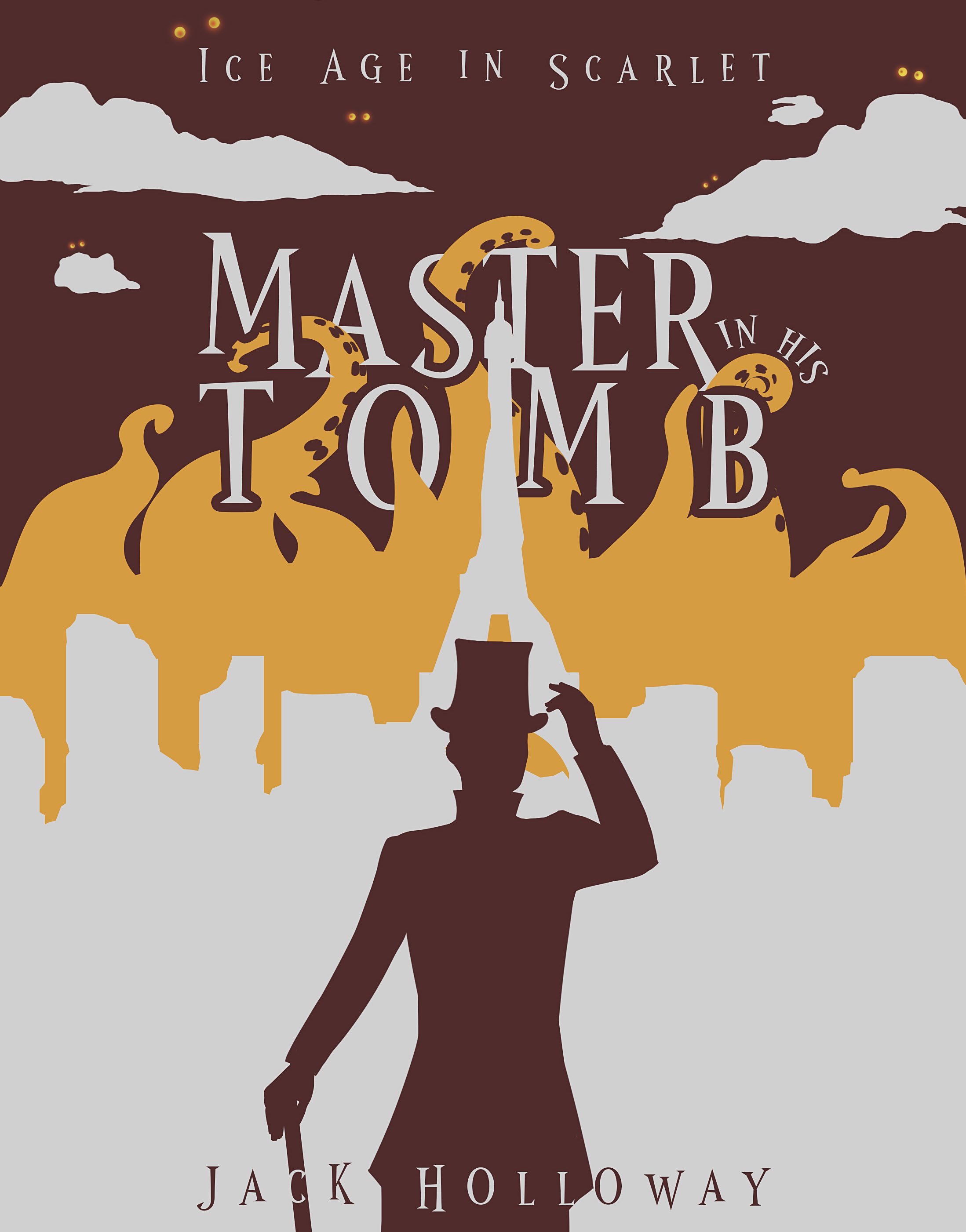
Other elements in the book? Well if you’ve read Master in his Tomb you’ll know there are no settlements around Paris at that point and that there’s a slightly insane German hiding out at a war memorial. This explains how that came to pass. Again the ending is a little brighter than usual.
You’ll have met some of the inhabitants of the settlements (at a distance) towards the end of the Bell Tower.
There’s also an appearance by Johnson-Pole, and a friend of his who appears in the next book as a ghost at the feast and a little bit of the prehistory of the Calais Crew and the fall of the Vampire Masters seen from a different point of view.
All in all I like this one. It has a self contained arc, it links nicely into much of the rest of the Ice Age in Scarlet and it acts as a glue that binds the whole together. I even have a little sympathy for the ‘baddy’ in the book, the Vampire who just wants things the way they were and who is doing his level best to make them that way using a very defective play book. Why is he a villain? Because he has that same nonchalance about the costs to others that underpins every fanatic.
He’s still not the nastiest character in the book though. Even though he is the villain.
 Ice Age in Scarlet